

Build a budget that works for you.
Budgeting is about more than limiting spending. It can help you understand your income, prepare for expenses, prioritize savings, and make more intentional financial decisions. Use these free resources to get started and build a budgeting approach that fits your needs.
Make a Budget Worksheet
See where your money is going and create a plan for what comes next.
The Make a Budget Worksheet provides a step-by-step way to organize your finances in one place. Start by identifying your take-home income, then work through common monthly expenses such as housing, food, healthcare, transportation, debt payments, and other costs.
The worksheet also includes a dedicated section for savings goals, allowing you to identify what you are saving for, how much you need, and how much you plan to contribute each month.
Use this resource to:
List your monthly sources of income
Identify fixed and changing expenses
Review how much you're spending in different areas
Account for debt payments and other obligations
Establish emergency savings and other financial goals
Compare your income with your total monthly expenses
A budget does not have to be perfect. The goal is to create a clearer picture of your finances so you can make informed decisions about where adjustments may be possible.
Budgeting Key Terms
Understand the language behind building and managing a budget.
Budgeting can be easier when you understand some of the terms used to describe income, expenses, savings, and spending habits.
The Budgeting Key Terms Guide explains common concepts such as gross and net income, fixed and variable expenses, needs and wants, balanced budgets, buffer funds, and being over or under budget.
It also introduces several commonly used budgeting approaches:
50/30/20 Budget
A guideline that allocates 50% of income toward needs, 30% toward wants, and 20% toward savings and debt.
70/20/10 Budget
A guideline that allocates 70% toward needs and wants, 20% toward savings, and 10% toward debt.
80/20 Budget
A simplified approach that allocates 80% toward needs and wants and 20% toward savings and debt.
Zero-Based Budgeting
A budgeting strategy where you create a personalized monthly plan so your income minus planned expenses equals zero.
These approaches are not one-size-fits-all. They can serve as starting points for finding a budgeting method that works with your income, expenses, priorities, and financial goals.
Continue Learning with Zogo
Build your financial knowledge at your own pace.
Once you have started reviewing your budget, continue building your financial knowledge through Zogo, an interactive financial education platform available to our community.
Zogo provides bite-sized financial education designed to make important money topics easier to understand. Use it alongside the budgeting resources above to continue learning and developing stronger financial habits.
Learn more below.
We’re sponsoring your financial education!
Download the Zogo app and sign up with the access code SFCUCARES.
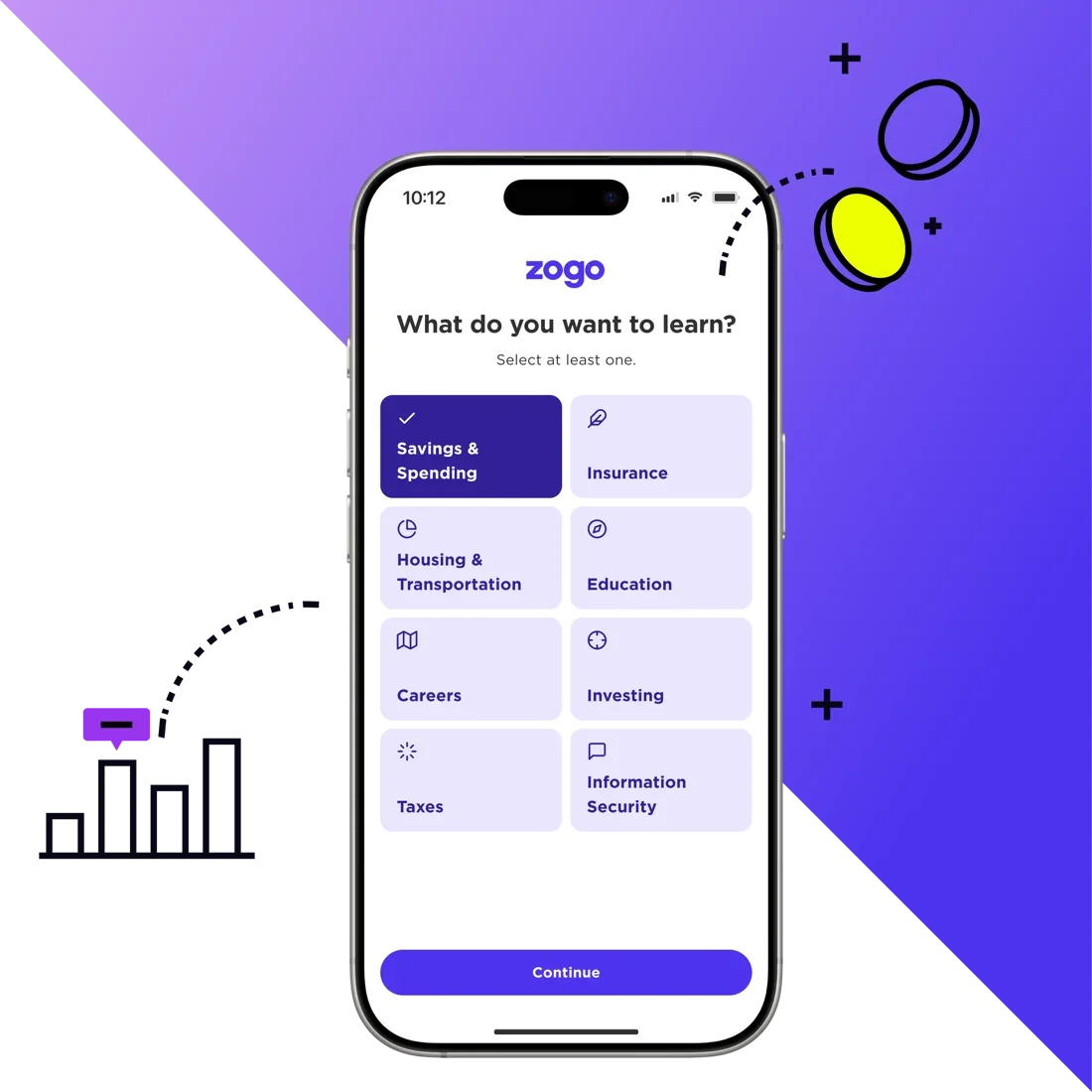

Achieve your financial goals with Zogo.
Start learning all the financial skills you need to do what matters most to you. Whether it’s traveling, buying your dream home, retiring early, or strengthening your money mindset, we’ve got you covered.
How Zogo Works

Bite-sized lessons
Learn at your own pace with bite-sized lessons.

Learn at your own pace
Build your own learning path based on your needs.

Set and reach goals
Use your financial superpowers to do what matters most to you.
4.8 Average Rating ⭐️⭐️⭐️⭐️⭐️ 55k Reviews
“I have gained a lot of confidence in myself on the way to financial literacy.”
Serena
Learn the skills that will help you build the life you want tomorrow.
Download the Zogo app and sign up with the access code SFCUCARES.